In the 18th century, Nantes became the most important slave-trading port in France.
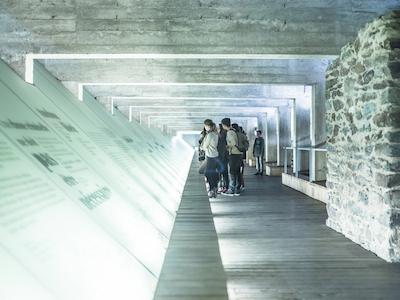
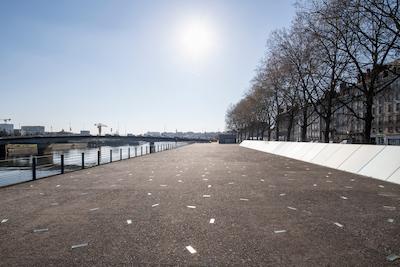
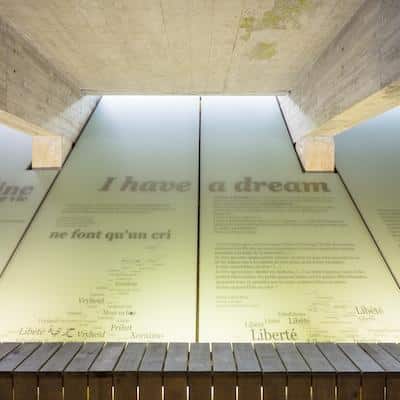
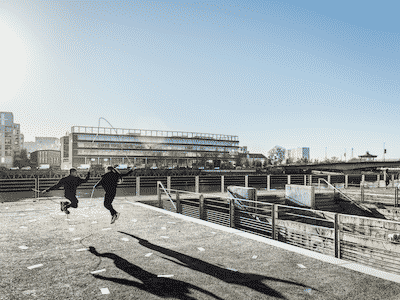
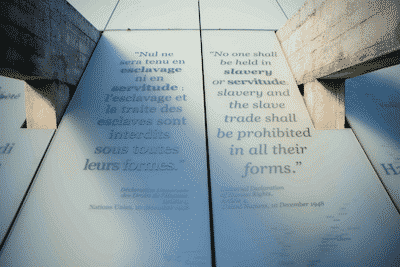
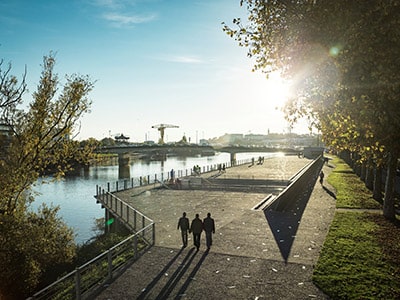
On a plant-covered walkway, 2,000 commemorative plaques remind the public of the slave ships that departed from Nantes as well as the major trading ports in Africa and America. A meditative promenade, marked with quotes on the subject of slavery from a variety of sources, runs alongside the Quai de Loire.
By inaugurating this memorial in 2012 – the only one of its kind in Europe – the city affirms its desire to “keep the memory of the past alive and let it be a warning for the future.” (K. Wodiczko and J. Bonder)
Krzysztof Wodiczko received the Hiroshima Art Prize in 1998, which rewards an artist for his/her contribution to world peace every year. Architect and teacher, Julian Bonder, is renowned for his work mixing public space, memory, and mass trauma experienced by populations.
Nantes is transforming
Nantes has been getting a major makeover since 2024.
The city is currently undergoing extensive public works, particularly around Île de Nantes (Quai de la Fosse and the Pont Anne-de-Bretagne bridge). Tram Line 1 will be temporarily suspended from mid-June to late August 2026. The city centre and Parc des Chantiers – Machines de l’Île will remain accessible, thanks to replacement buses and to the pedestrian and cycling routes that will continue to be open. Park-and-ride facilities are available to drivers.
For further information
Quai de la Fosse 44000 Nantes
How to get there?
Parking(s) nearby: Parking Médiathèque, Parking Gloriette 2, Parking Les Machines
Public transport: Chantiers Navals, Médiathèque
Self-service bicycles: Médiathèque, Palais de justice, René bouhier, Alger, Machine de l'île, Brunelière


The underground passage is open daily in free access : from 9 am to 8 pm from May 16 to September 15, and from 9 am to 6 pm from September 16 to May 14
Closed when the Loire is in flood.
Final entrance one half-hour before closing.
Annual site closures:
January 1, May 1, November 1, December 25
Maintenance from 18 to 31 January 2027

Free access


